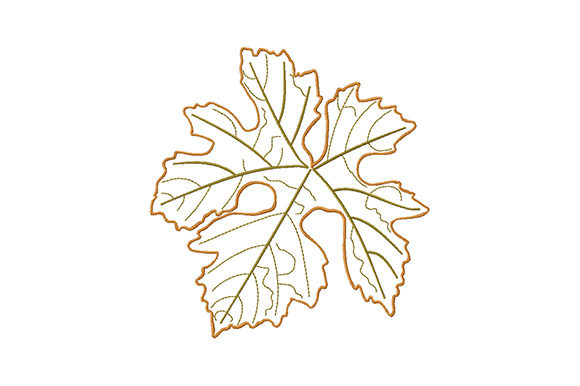
Single Autumn Falling Leaf: A Designer’s Review
As a designer who spends more time staring at stitch maps than actual fabric, I have learned that the simplest designs are often the hardest to get right. There is nowhere for poor digitizing to hide when you are working with a solitary motif. This is exactly why I took a close look at Single Autumn Falling Leaf. It is not a complex scene or a busy monogram frame; it is a singular statement piece. For embroidery designers, Etsy sellers, and craft business owners, understanding how a minimal design behaves under the needle is crucial for maintaining professional standards in your finished product.
First Impressions and Visual Mood
The first thing that strikes you about Single Autumn Falling Leaf is its elegance through restraint. In a market saturated with overly dense patterns, this design offers a breath of fresh air. The shape captures the organic, asymmetrical beauty of a leaf in motion, suggesting a gentle descent rather than a static pose. This visual personality makes it incredibly versatile. It does not scream for attention; instead, it invites a closer look.
The mood it creates is distinctly seasonal yet timeless. While it falls under the Autumn category, the silhouette is classic enough to work beyond just October decor. For a handmade product, this translates to higher perceived value. Customers often associate clean, well-defined lines with quality craftsmanship. When I visualize this on a mockup, it feels sophisticated, avoiding the cluttered look that can sometimes plague lower-quality digital embroidery files.
Real-World Application: The Custom Tote Bag Test
To truly evaluate a design, you must imagine it in a real-life scenario. I recently considered this motif for a custom embroidered tote bag project for a local boutique. The goal was to create a subtle, earthy aesthetic that would appeal to customers looking for sustainable, stylish accessories. Single Autumn Falling Leaf fit this brief perfectly.
Placed slightly off-center on a canvas tote, the design acts as a focal point without overwhelming the fabric. Because it can be used to create a border, I also experimented with placing it along the hemline. Here, the design shines as a delicate accent. For an Etsy seller, this versatility is a major selling point. You are not limited to one placement strategy. Whether it is sweatshirt embroidery on the chest or a small detail on a baby onesie, the scale feels appropriate. It avoids the "stiff patch" look that often happens when a design is too dense for the garment.
Versatility Across Product Lines
Beyond tote bags, I see strong potential for this design in several other areas:
- Custom Apparel: It works beautifully on sweatshirts and t-shirts, especially when using tonal thread colors for a subtle, textured effect.
- Home Decor: Imagine this on a linen pillow cover or a kitchen tea towel. It adds a touch of nature-inspired warmth to interior items.
- Personalized Gifts: Paired with a simple name or date, it becomes a heartfelt holiday gift or wedding favor.
- Embroidered Patches: The clear outline makes it an excellent candidate for iron-on patches, a popular item for small shop products.
Technical Performance and Stitching Clarity
From a technical standpoint, the success of any machine embroidery design lies in its stitch structure. While I do not have the exact stitch count or file format details for Single Autumn Falling Leaf in front of me, I can infer certain qualities based on its visual presentation. A design like this likely relies on a combination of satin stitch for the veins and edges, and potentially fill stitch for the body of the leaf, depending on the desired size.
Stitch density is a critical factor here. If the density is too high, the fabric will pucker, especially on thinner materials like cotton voile or lightweight jersey. If it is too low, the underlying fabric might show through, breaking the visual continuity. For commercial embroidery projects, consistency is key. I recommend testing the design on scrap fabric first. Check how the thread colors interact with the fabric texture. A high-contrast thread on a dark fabric will highlight every imperfection, while a tonal approach can mask minor tension issues.
For those using this as an applique design, ensure the cut lines are clean and the tack-down stitches are secure. The simplicity of the leaf shape makes it forgiving for applique, but precision is still required to maintain that crisp, professional edge.
Navigating Fabric and Hoop Constraints
Not every fabric is a friend to every design. When working with Single Autumn Falling Leaf, you must be mindful of the material you are stitching on. Stretchy fabrics, such as performance wear or thin knits, require careful stabilization. Without proper support, the running stitch or satin edges can distort during washing.
Here are some practical considerations for different surfaces:
- Curved Surfaces: If you are embroidering on caps or hats, the curvature can distort the leaf's shape. Use a strong stabilizer and consider reducing the stitch density slightly to prevent puckering.
- Dark Fabrics: Ensure your thread colors have enough contrast. If the design lacks definition on black or navy, it may lose its impact. Test it in black and white mockups to check for clarity.
- Small Hoop Sizes: Verify the hoop size compatibility before purchasing. If the design is intended for a 4x4 hoop, ensure your machine can handle it without excessive re-hooping, which can lead to misalignment.
- Frequent Washing: For items like baby clothes or kitchen towels, durability is paramount. Inspect small details after a test wash to ensure the stitches hold up and do not unravel.
Enhancing Brand Consistency and Customer Trust
For creative entrepreneurs and digital product sellers, the designs you choose reflect your brand identity. Using a high-quality, well-digitized motif like Single Autumn Falling Leaf signals professionalism. It shows that you care about the details. When customers receive a finished product that looks clean and intentional, their trust in your brand grows. This leads to repeat business and positive reviews, which are the lifeblood of any small business.
Moreover, this design serves as an excellent asset for printable mockups and digital previews. Its clean lines render well in photos, helping you create compelling listings for your online shop. Whether you are selling the physical embroidered item or the digital embroidery file itself, presentation matters. A design that looks good on screen and even better in hand is a rare find.
Final Designer Notes
Before you commit to using Single Autumn Falling Leaf in a large batch or client project, take these final steps:
- Check Licensing: Always confirm the license terms. Can you use it for commercial purposes? Are there restrictions on selling the digital file versus the finished product?
- Test Thread Combinations: Experiment with variegated threads to enhance the autumnal feel, or stick to solids for a modern look.
- Inspect Detail Level: Zoom in on the digitized file if possible. Look for unnecessary jump stitches or overly complex paths that could slow down your machine.
- Consider the Audience: Does this design resonate with your target customer? For a boutique focusing on minimalist aesthetics, it is a perfect fit. For a brand focused on maximalist patterns, it might serve better as a subtle accent.
In conclusion, Single Autumn Falling Leaf is a thoughtful addition to any designer’s library. It balances aesthetic appeal with practical usability, making it a reliable choice for a wide range of embroidery projects. By approaching it with the right technical preparation and creative vision, you can elevate your handmade products and deliver exceptional value to your customers.